pH Explained
What does pH mean in heating system water
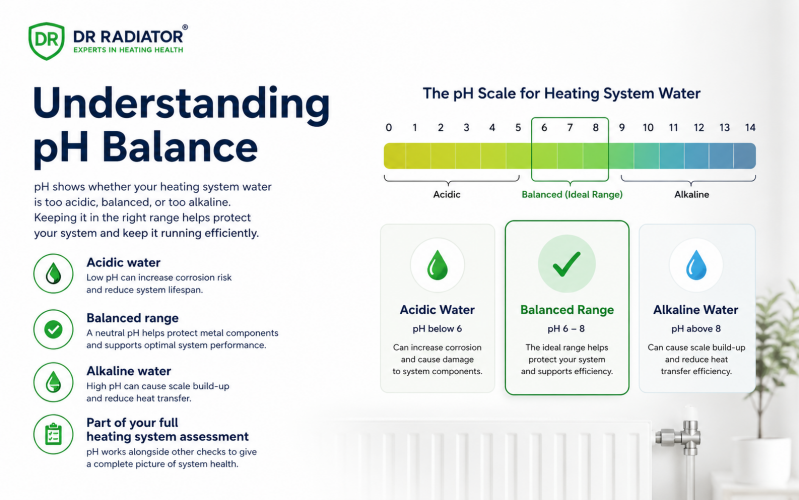
pH is a measure of whether heating system water is more acidic, neutral or alkaline.
In a central heating system, water balance matters because different metals, chemicals and components all work best within suitable conditions.
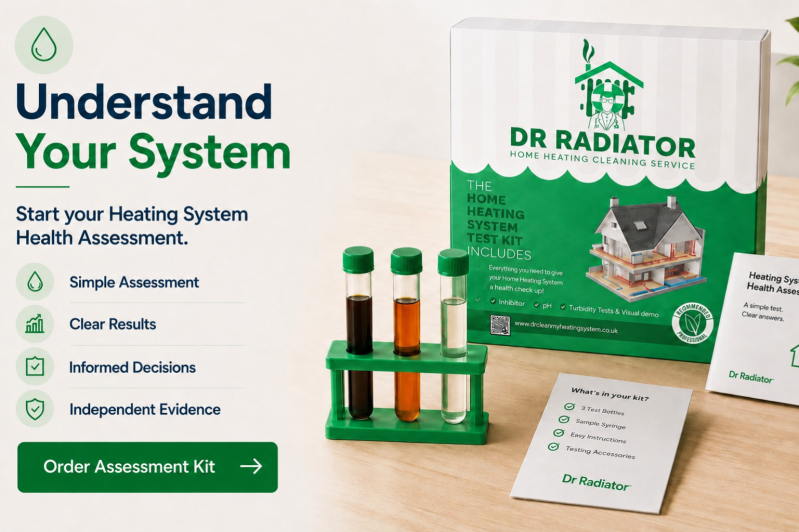
The Dr Radiator Heating System Health Assessment checks pH as one of three key areas, alongside water quality and inhibitor protection.
Why pH balance matters
Heating system water should remain within a suitable range to support long-term system protection.
If the water becomes too acidic or too alkaline, it may affect how well the system is protected and may contribute to changing water conditions over time.
pH does not tell the whole story on its own, but it is a useful indicator when assessing overall heating system health.
What low pH may suggest
Low pH means the heating system water is more acidic.
Acidic water may increase the likelihood of corrosion affecting radiators, pipework, pumps, valves and boiler components.
If a low pH result is recorded, it should be considered alongside the inhibitor and turbidity results before deciding what action may be needed.
What high pH may suggest
High pH means the heating system water is more alkaline.
Alkaline water may affect water balance and may contribute to deposits, instability or compatibility concerns in some heating systems.
The impact can depend on system design, boiler materials, chemical treatment history and manufacturer guidance.
Why does testing first help
Guessing water condition from heating symptoms alone can be misleading.
Cold radiators, noisy operation, poor circulation or repeated maintenance issues may have several possible causes.
Testing pH alongside turbidity and inhibitor protection helps create a clearer picture before spending money on chemicals, cleaning or further work.
pH and the bigger picture
A pH result should always be viewed as part of the full Heating System Health Assessment.
Water quality, inhibitor protection and pH balance together help show whether your system water appears stable, protected or in need of further attention.
Your online dashboard explains your pH result in clear language and provides recommended next steps based on the wider assessment.