Turbidity Explained
What does turbidity mean in a heating system water
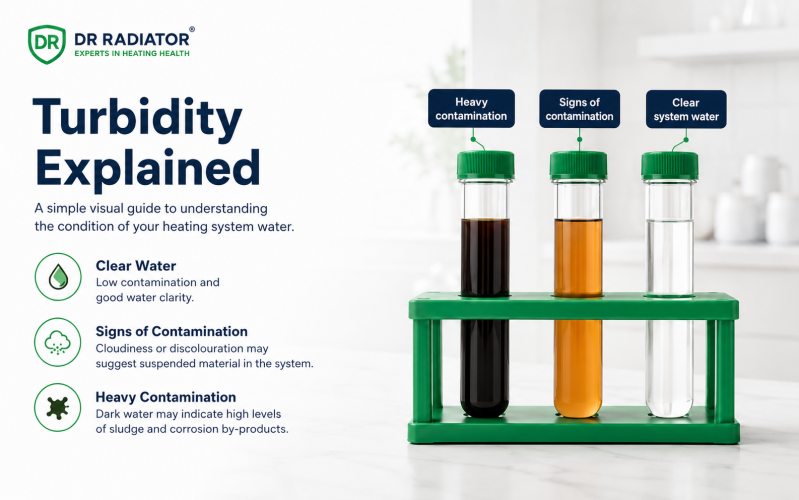
Turbidity refers to how clear or cloudy your heating system water appears.
In a central heating system, cloudy, dark or dirty-looking water can suggest that suspended material, corrosion by-products, sludge or debris may be present in the system water. Turbidity is one of the three key checks included in the Dr Radiator Heating System Health Assessment, alongside inhibitor protection and pH balance.
Why turbidity matters
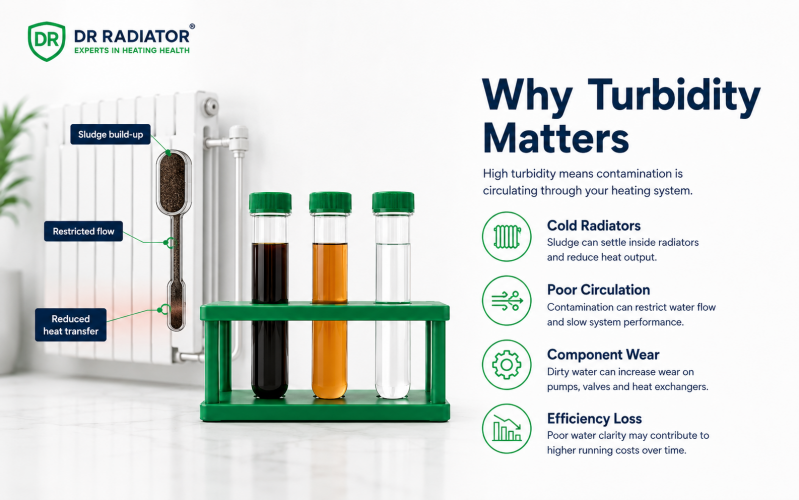
Heating system water should be able to circulate freely through radiators, pipework, pumps, valves and boiler components. When the water contains suspended material or sludge, it can make circulation less effective and may contribute to cold spots, poor heat transfer, noisy operation or reduced heating performance.
Turbidity does not tell the whole story on its own, but it is a useful indicator of water quality and possible contamination.
What dark or black heating water may indicate
Dark brown or black heating system water is often linked to magnetite, a dark corrosion by-product that can form inside steel radiators and pipework. This does not automatically mean that a full system clean is required, but it is a clear sign that the system water should be checked.
The Dr Radiator assessment helps you record your turbidity result and understand it alongside your inhibitor and pH results.
Why does testing first help
Symptoms such as cold radiators, slow warm-up times or black radiator water can have more than one cause. Testing your heating system water helps reduce guesswork by showing whether water quality may be part of the problem.
Your online dashboard explains your turbidity result in clear language and provides recommended next steps based on the wider Heating System Health Assessment.
Turbidity and the bigger picture
A turbidity result should always be considered alongside the other assessment checks. Water quality, inhibitor protection and pH balance together provide a clearer picture of overall heating system condition. This helps you make more informed decisions before spending money on chemicals, cleaning, repairs or maintenance.
Want to understand your heating system water?
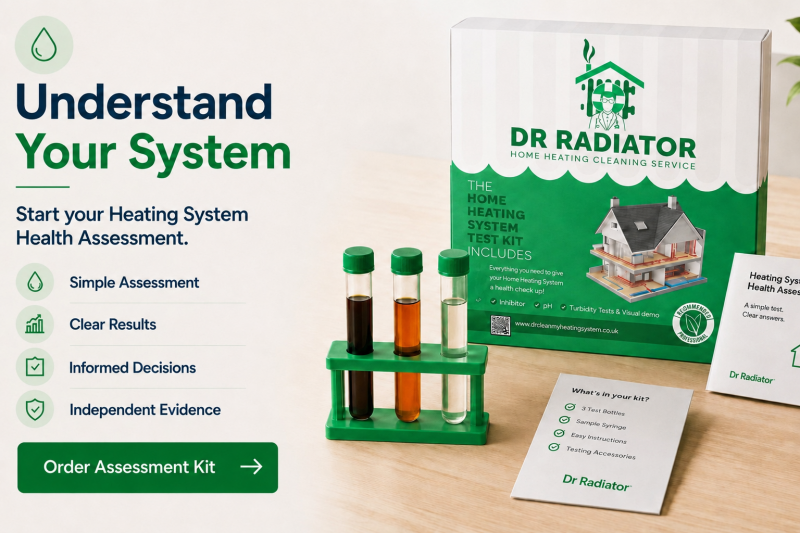
The Dr Radiator Heating System Health Assessment Kit helps you check water quality, inhibitor protection and pH balance from home.
Your results are turned into an online dashboard, printable PDF report, completion certificate and recommended next steps.